Who it helps
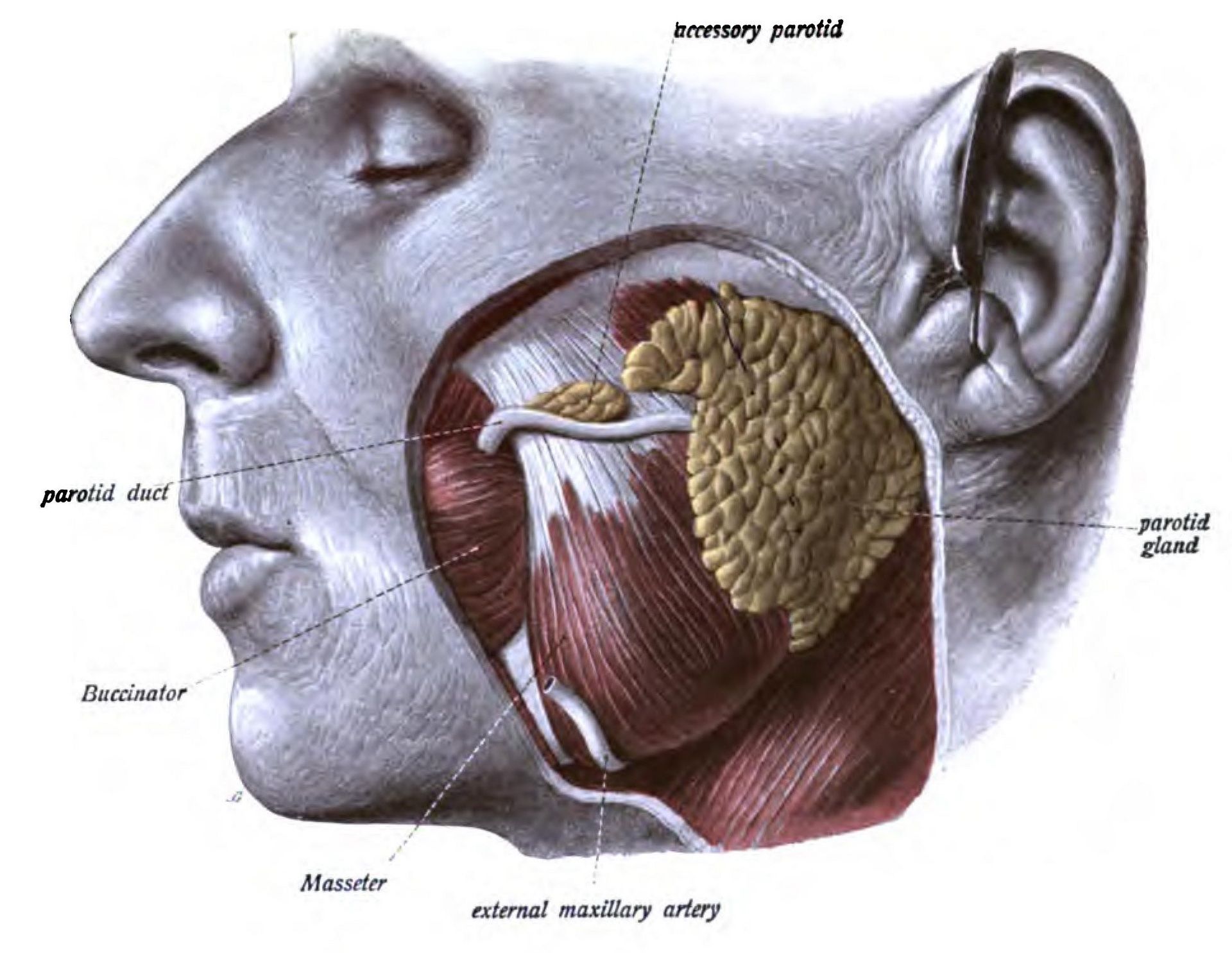
The salivary glands make saliva and drain it into the mouth through fine ducts. A stone or a narrowing in the duct blocks the flow, so the gland swells and aches at mealtimes, and can become infected.
What happens
A semi-rigid endoscope about a millimetre wide is passed into the duct through its natural opening in the mouth. Dr Kana can see the stone or narrowing, remove small stones with a tiny basket, and widen narrowings. Larger stones may need a small cut inside the mouth.
In 2019 Dr Kana published a review of 15 patients and 17 glands treated this way between 2008 and 2018: 73.3% were treated successfully, avoiding removal of the gland. The reasons for the cases that did not succeed, such as large stones, are discussed in the paper.
Recovery
Most patients go home the same day. The gland is often swollen for a day or two. Drinking plenty, sour sweets and massaging the gland help keep saliva flowing.
Common questions
Will I need my gland removed?
Most people do not. Removal is considered when the scope cannot clear the blockage or the gland keeps getting infected.
Is it done under general anaesthetic?
Usually, although some cases can be done under local anaesthetic.
Can stones come back?
Sometimes. Keeping well hydrated helps prevent them.
This page is general information, not medical advice for your situation.